The ofrenda — the altar built to welcome back the dead — is the heart of Día de los Muertos. This year San Antonio has hundreds of them, from a single family photo on a market stall to an exhibition hall four dozen years in the making. Here is where to see the most meaningful ones, what you’re looking at when you stand in front of one, and how to build a small one at home if this is your family’s year to start.
The big ones: 80+ altars at Muertos Fest
Hemisfair, 630 Nueva St — Saturday, Oct. 24, 10 AM–11 PM; Sunday, Oct. 25, noon–9 PM. More than 80 community altars line the festival grounds, each built by a family, school, artist or neighborhood group. Give yourself at least an hour just for the altars — the processions (Saturday 7 PM, Sunday 3 PM) pass right by them. Full guide: Muertos Fest 2026.
The neighborhood ones: Esperanza, Nov. 1
Rinconcito de Esperanza, 816 S. Colorado St — Sunday, Nov. 1, 4–10 PM. The Esperanza Peace and Justice Center’s 31st annual celebration holds more than 20 community altars in a West Side courtyard, with live music and a procession to the Alazán-Apache Courts. These are deeply personal altars — many honor family and local figures. If you can’t come Sunday night, the altars stay on view November 2–8, 10 AM–5 PM.
The art exhibition: Centro Cultural Aztlan, Nov. 2
1800 Fredericksburg Rd., Suite 103 — opening Monday, Nov. 2, 6–9 PM. The 49th annual Altares y Ofrendas exhibition is San Antonio’s longest-running altar show: part memorial, part art gallery, with pan de muerto and an artisan market on opening night. The exhibit stays up through November 12, so this is the one to pick if the weekend is too crowded for you.
More altars worth your time
- Pearl — community altar all week from Oct. 27 (312 Pearl Pkwy), with ofrendas by local artists and a main celebration Sunday, Nov. 1, 5–9 PM. The community altar is the one place on this list where you are invited to add a copy of a photo or a name yourself.
- Historic Market Square — Oct. 24–25, 10 AM–6 PM (514 W. Commerce St): traditional altars among the market stalls, with a cultural dance procession at 1 PM both days.
- San Anto Cultural Arts — Nov. 1, 6–9 PM (2120 El Paso St): altars and ofrendas built by students, with a neighborhood procession.
- Celebrando las Misiones — Oct. 24, 4–10 PM (Mission Marquee Plaza, 3100 Roosevelt Ave): altars and offerings near the historic missions.
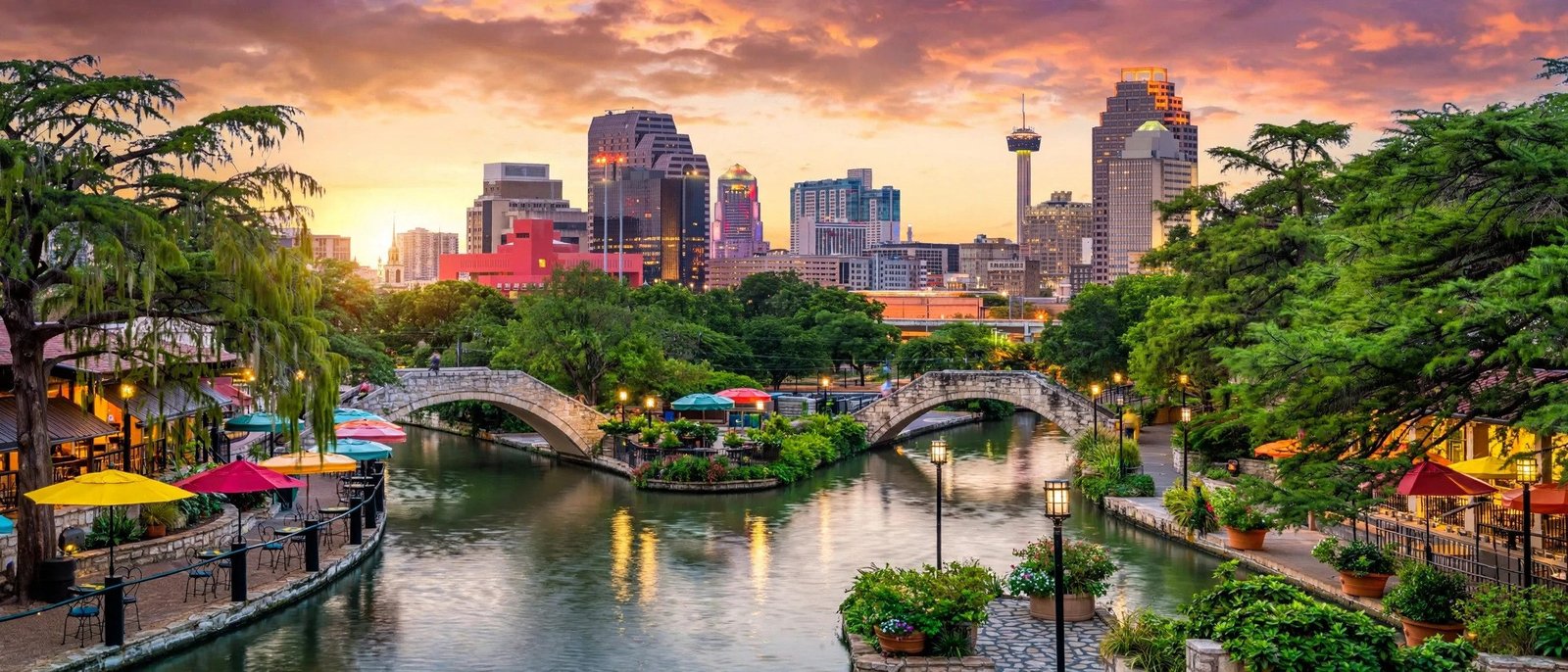
- Tradition Trail, the River Walk — through Nov. 2: seasonal altars, calaveras and giant alebrijes along the water, free to view any time at your own pace.
How to look at an ofrenda
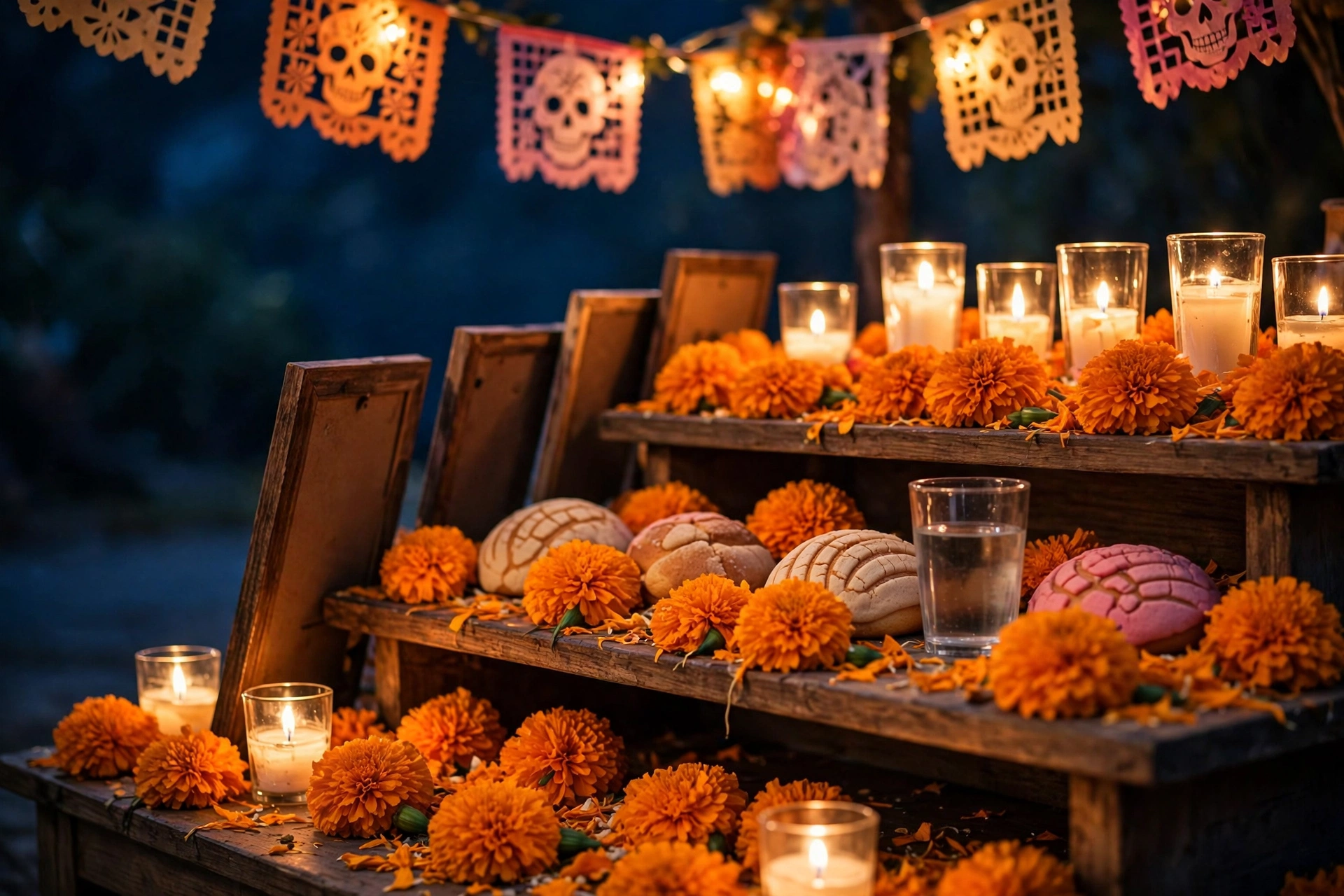
Every altar is built in levels — usually two, three or seven — and stocked with the four elements. Once you know them, you can “read” any altar in the city:
- Photos and belongings of the person being remembered — the whole point of the altar.
- Marigolds (cempasúchil) — the orange flowers whose color and scent are said to guide spirits back. Petals are often scattered as a path.
- Candles and light — fire, and a sign of hope and remembrance.
- Water — left out for thirsty travelers, and for refreshment.
- Salt — for purification, often in a small dish or a cross.
- Pan dulce and favorite foods — the dead are welcomed with the things they loved in life. Pan de muerto, the round sweet bread topped with crossed “bones,” is the classic.
- Papel picado — the cut-paper banners overhead; the paper moves in the wind, which stands for air.
- Incense (copal) — its smoke is said to clear the path and carry prayers.
Etiquette is simple: an ofrenda is a memorial, not a display. Look as long as you like, read the names, take photos of the altar itself — but don’t touch offerings, don’t move anything, and ask before photographing a family standing at their own altar.
How to build a small ofrenda at home
You don’t need much, and there is no wrong size. Families often build one on a table, a shelf, or a stack of boxes covered with a cloth.
- Choose your levels. One flat surface is fine. Two or three steps (boxes under the cloth) give you room for more photos.
- Put the photos at the center. Print a photo of each person you’re remembering. Add something small that was theirs, or that they loved — a recipe card, a rosary, a favorite snack.
- Add the elements. A glass of water, a small dish of salt, a candle (a battery candle is fine near paper and photos), and marigolds — real ones from a market, or paper ones you cut yourself.
- Feed them. Pan dulce, fruit, and their favorite food or drink. It doesn’t have to be elaborate — it has to be theirs.
- Hang or lay papel picado above or around the altar, and write their names where you’ll see them.
- Light it on the evenings of Nov. 1 and Nov. 2 — Nov. 1 honors children who have died (Día de los Inocentes), Nov. 2 honors adults. Many families leave the altar up a few days longer.
If you’d like to see how San Antonio families do it before you build your own, the full weekend list is here: Every free Día de los Muertos event in San Antonio, Oct. 24 – Nov. 2.
Helpful links & phone numbers
- Centro Cultural Aztlan: centroculturalaztlan.org
- Esperanza Peace and Justice Center: esperanzacenter.org
- Pearl Día de los Muertos series: events.atpearl.com
- Free events calendar: sanantoniobenefits.com/free-events-calendar
- VIA Metropolitan Transit: 210-362-2020
- City information line: 2-1-1 or 210-207-6000
One more thing that helps families: our free checker shows you which benefits you may qualify for — food help, health coverage, utility help and more — in about two minutes: Check what you may qualify for.
This guide was free. If it helped your family, $3 a month keeps this running for the next family.
$3 a month helps pay for the hosting and the checking that keeps this help free and up to date.
Gifts are not tax-deductible.
Free food, free rides, free clothes, free furniture and more — all in one place.